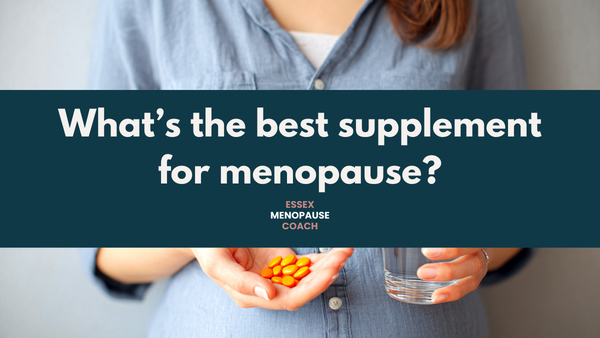
This is one of the most searched questions around menopause.
It’s also one of the most common questions I’m asked about in talks, group sessions and 1:1 coaching. And I get why…
When you’re exhausted, not sleeping, anxious and still expected to turn up at work switched on and ready to go and juggle a busy home life, a supplement feels like the simplest answer.
So let me say this clearly.
I’m not anti supplement.
But I am very clear about how they should be used more sparingly.
Supplements are big business
Menopause supplements are everywhere.
Social media is full of “this fixed my menopause” posts.
And many women arrive at sessions carrying an actual carrier bag full of capsules so we can “go through them”.
But then we start talking about real life:
- What does a normal day of eating look like?
- Do you cook much?
- How much caffeine and alcohol are you relying on?
- Are you active or mostly sedentary?
- How stressful is work and home life?
- When do you actually rest?
And a familiar picture appears.
And this is how the day usually plays out…
You rush out the door after sorting everyone else’s breakfast, grabbing a coffee for yourself on the way out. No food, the coffee will do. It fills you up and saves calories… right?
The morning starts adrenaline fuelled. You feel sharp enough at first, ticking things off your list. But by mid morning the clear thinking drops off fast.
So you grab another coffee. Maybe a couple of biscuits as a quick pick me up.
Lunch is a rushed sandwich, eaten at your desk because there’s too much work to do and no time to stop.
By the time you’re driving home, you’re exhausted – mentally and physically. You walk through the door determined to get something decent for dinner… open the fridge… and just stare.
A bag of lettuce.
A jar of jam.
A pack of eggs.
What on earth are you meant to make with that?
So it’s takeaway again. A glass of wine. Collapse on the sofa. You’ve had a hard day. You deserve it.
So supplements become a sticking plaster for things that feel too hard, too time consuming or too overwhelming to change. And I get that. We’re wired to look for the quickest route.
Supplements should support your foundations, not replace them
Supplements can support menopause symptoms. They can be helpful when used well.
But they don’t replace:
- Regular meals that actually stabilise energy
- A diet that’s nourishing rather than restrictive
- A nervous system that’s constantly on high alert
- Chronic stress
- Poor sleep
- A life with no breathing space
When those foundations are missing, supplements are trying to compensate for far more than they’re designed to do.
Which is why so many women say:
It helped a bit… then it stopped”
So… what is the best supplement for menopause?
If you’re going to take supplements:
- Invest in the best quality you can afford
- Choose brands that are properly formulated, without unnecessary fillers, binders or colours (things like artificial sweeteners, synthetic dyes, magnesium oxide as a cheap filler, excessive bulking agents)
Quality matters far more than quantity.
A few examples from my work in practice
For women who are:
- Highly stressed
- Anxious
- Sweating a lot
- Feeling wired and exhausted
👉 Magnesium and B vitamins can be genuinely helpful, particularly when stress levels are high and the nervous system is constantly switched on.
This is a supplement brand I like and I’ve listed my recommended options (with a purchase code) on my recommended products page.
If sleep is your biggest struggle, magnesium glycinate is often a good option, it’s more calming and better tolerated than some other forms. Taking it around 30 minutes before bed tends to work best.
One very important note
If you’re taking:
- Any prescribed medication
- Or have an existing medical condition
It’s essential to check that supplements are safe for you. There can be contraindications. This is also why I’m cautious about blanket recommendations, what helps one woman can be inappropriate for another.
Sometimes the most effective “supplement” is actually:
- Eating properly during the day
- Breathing in a way that calms your system
- Stopping the cycle of restriction and exhaustion
- Having support to help you prioritise what matters most
And then, if supplements are needed, they make far more sense.
If this sounds familiar…
If you’re fed up of guessing what to do next, Googling and throwing money at things that don’t end up working, you might be ready to get some proper support so you can focus on the things that actually make a difference.
This is exactly why I offer:
- Small group coaching – space to ask your questions and get an answers you can apply straight away, a supportive group of only 3 women (perfect if you feel anxious in these situations), affordable and accountability
- 1:1 sessions – space to look at your symptoms, your life and decide what’s actually worth focusing on.
If reading this made you think “this is me”, that’s usually a sign worth paying attention to.
You can explore my group coaching sessions or 1:1 support via the website or feel free to contact me if you’d like to have a conversation first. No pressure, just a chance to work out what would actually help.