Pelvic Floor Dysfunction in Menopause: What You Need to Know
When we think about menopause, we often focus on symptoms like hot flushes, night sweats and mood swings. But what about pelvic health? Pelvic floor dysfunction in menopause is a real issue that doesn’t get nearly enough attention, yet so many women experience problems like stress incontinence, urgency and discomfort—without realising menopause is playing a role.
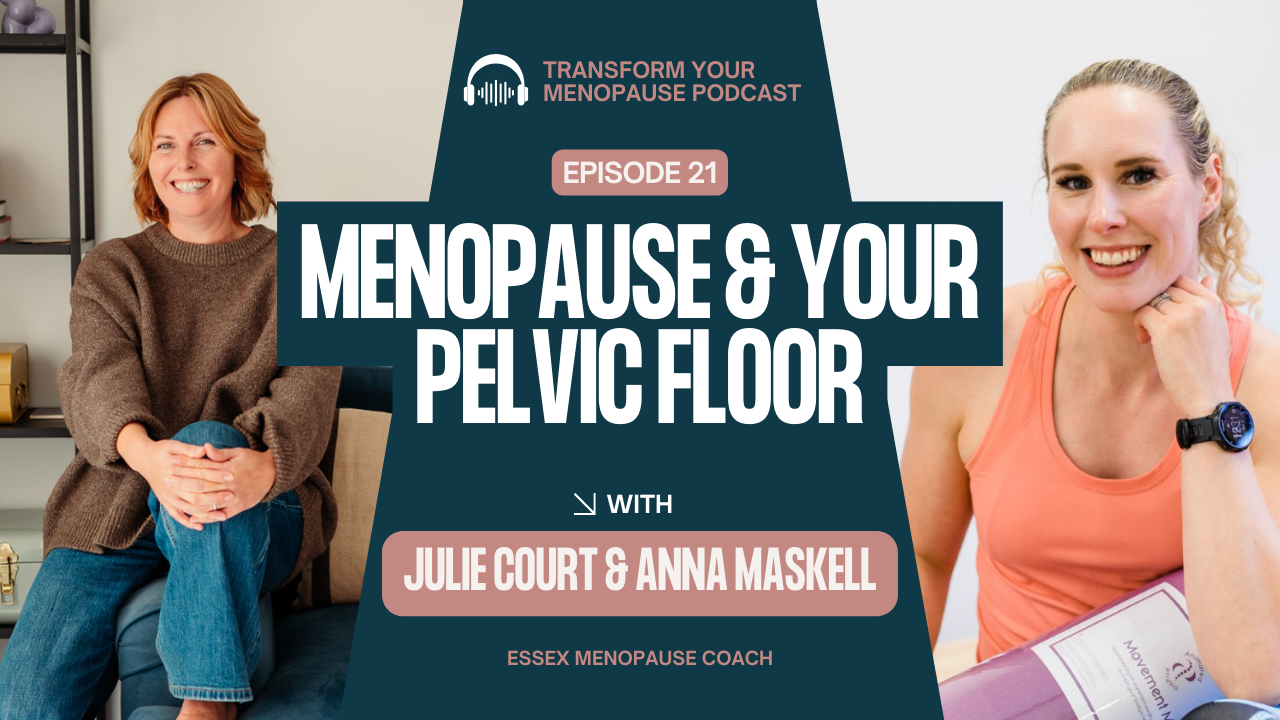
The good news? These symptoms aren’t just something you have to live with. There are solutions that can help you regain control, comfort and confidence. In this post, I’m sharing insights from my latest podcast episode with Physiotherapist and women’s health specialist, Anna Maskell (Clinical Director of Animated Physio). We cover the best strategies for improving pelvic floor health in menopause—and trust me, there’s plenty here you can start doing today!
🎧 Watch to the full episode on YouTube
Why Does Menopause Affect Your Pelvic Floor?
One of the biggest reasons menopause impacts pelvic health is the drop in oestrogen levels. Oestrogen plays a vital role in maintaining the strength and elasticity of tissues, including those in your pelvic floor. As levels decline, you may notice:
- Weakened pelvic floor muscles
- Increased risk of stress and urge incontinence
- Vaginal dryness and discomfort
- A higher chance of developing a prolapse
And it’s not just about your pelvic floor—menopause affects your whole body, including joint health, muscle strength and posture, all of which can have a knock-on effect on bladder control and core stability.
We explore all of this in the episode—listen here.
Common Pelvic Floor Issues in Menopause
Many women don’t connect their pelvic floor dysfunction with menopause. Instead, they assume it’s just a normal part of aging. But if you’re experiencing any of the following, it’s time to take action:
Stress Incontinence – Leaking when coughing, sneezing, laughing or exercising.
Urge Incontinence – That sudden, desperate need to go to the toilet (often described as “key-in-the-door” urgency).
Pelvic Organ Prolapse – A feeling of heaviness or pressure in the pelvis, sometimes described as a sensation of something “falling out.”
Vaginal Dryness & Discomfort – A common but rarely talked-about issue that can affect everyday comfort and intimacy.
These symptoms can have a huge impact on confidence, movement and quality of life. But the good news is there are simple, effective ways to support your pelvic health.
How to Strengthen & Support Your Pelvic Floor in Menopause
1. Learn the Right Way to Engage Your Pelvic Floor
So many women are told to “do Kegels,” but most aren’t doing them correctly. Many think they need to clench their bum or tighten their abs, but this can actually create more tension rather than strengthening the right muscles.
Instead, think about gently lifting the muscles as if you’re stopping yourself from passing wind. The key is to contract on the exhale and relax on the inhale, allowing the pelvic floor to work with your natural breath cycle.
2. The “Knack” Technique to Reduce Leaks (Timestamp: 17.35)
One of my favourite practical tips from the episode is the Knack technique—a quick, conscious pelvic floor squeeze before activities that put pressure on your bladder, like coughing, sneezing, or lifting. Studies show this can reduce leaks by up to 75% in just a week!
Anna breaks this down brilliantly in the episode—jump to [17.35] to hear us discuss it!
3. Use Local Oestrogen for Vaginal Health
If you’re experiencing vaginal dryness or discomfort, local oestrogen (creams, pessaries or rings) can be life-changing. Unlike systemic HRT, local oestrogen works directly on vaginal tissues to improve moisture, elasticity and comfort—without affecting the rest of your body.
4. Don’t Hold Your Breath – Use It to Your Advantage!
Breathwork is a game-changer for pelvic health. Your diaphragm and pelvic floor work together, so shallow breathing can lead to tension and dysfunction. Deep, diaphragmatic breathing helps the pelvic floor relax and engage naturally, improving control and reducing symptoms.
A simple technique? Humming breath (Timestamp: 29.56). Your pelvic floor and diaphragm are closely linked to your vocal cords, so humming or singing can help reset the system. Try this:
- Place your hands over your ears.
- Inhale deeply through your nose.
- Exhale with a long, low hum.
- Repeat for six rounds.
This helps release tension in the jaw, diaphragm and pelvic floor—making it especially beneficial if you tend to hold stress in your body. Jump to [29.56] in the episode to hear more about this technique & try for yourself!
5. Small Lifestyle Tweaks That Make a Big Difference
- Stay Hydrated – Many women drink less to avoid leaks, but dehydration can worsen bladder irritation, joint pain and brain fog.
- Stretch & Move – Hip flexibility directly affects the pelvic floor. Yoga poses like pigeon stretch, child’s pose and happy baby can help keep everything working smoothly.
- Avoid Bladder Irritants – Caffeine, alcohol and even things like lemon can make urgency worse. Swap one coffee a day for water and see if it helps!
Take Control of Your Pelvic Health
Pelvic floor dysfunction in menopause is common, but it’s not inevitable. With the right strategies—proper pelvic floor activation, breathing techniques, local oestrogen and small daily tweaks—you can regain strength, control and confidence.
If you’d like to explore breathwork in more depth, join me for my Introduction to Breathwork for Menopause Workshop on March 21st at Animated Physio. Discover how your breathing patterns may be affecting your symptoms (from sleep issues to anxiety) and learn practical techniques to retrain your breath.
👉 Book your spot here! Friday 21st March 7:30pm, Billericay.
Listen & see my full list of episodes with links to all your favourite platforms by clicking here.
Connect with Anna Maskell, Animated Physio
Free trial Pilates class – either at Anna’s Essex studio or on Zoom - Book here
Looking for the perfect exercise mat? Anna’s Movement Mat is designed for ultimate comfort, grip & support—ideal for everything from Pilates to strength training –Check it out here